
 Listing checkedFree TrialPaid
OpenArt
Browser studio that generates images with GPT Image 2, Nano Banana Pro and Seedream 5.0, then edits, upscales, trains characters and makes video on one canvas.
- Ratings
- No member reviews yet
- Price
- From $14/mo
- Last updated
Key takeaways
- OpenArt is a browser studio that generates images with third-party models, currently GPT Image 2, Nano Banana Pro and Seedream 5.0, and then lets you edit the same image on the same canvas: erase, expand, swap the background, restyle or upscale to 4K. Around that core sit reference-image generation, Character Training, Model Training and video generation. It runs no proprietary foundation model of its own that we could find.
- The audience has widened from prompt hobbyists to people who make recurring visual work. Canaan, which led the January 2026 Series A, says the traction comes from repeat creator workflows around characters, worlds and storylines rather than one-off images. Artists, designers, game and anime creators and marketing teams are the groups it's aimed at.
- Pricing runs on credits and per-seat plans. As of August 2026 the live page lists Starter at $14, Plus at $34 and Wonder at $240 a seat per month, each shown with a promotional discount, plus a Pro tier whose price was not visible. There is a seven-day trial with 40 credits and no card, and no permanent free plan is documented. Base credits reset monthly and unused ones are lost, and the July 2026 terms say purchases are non-refundable.
- Traffic is large and roughly flat. Third-party estimates put June 2026 at about 9.3 million visits, down around 15% on May, inside a band of 8.7 to 10.9 million a month since November 2025. Canaan's figure of 8 million monthly active users is the company's own.
- The biggest caveat is billing. The Better Business Bureau lists 21 complaints in three years, seven of them about billing, and Trustpilot reviews describe accidental annual charges, credit disputes and refund frustration. The recurring flashpoint is base credits vanishing at renewal, which the terms disclose but which customers say isn't made prominent enough.

What is OpenArt?
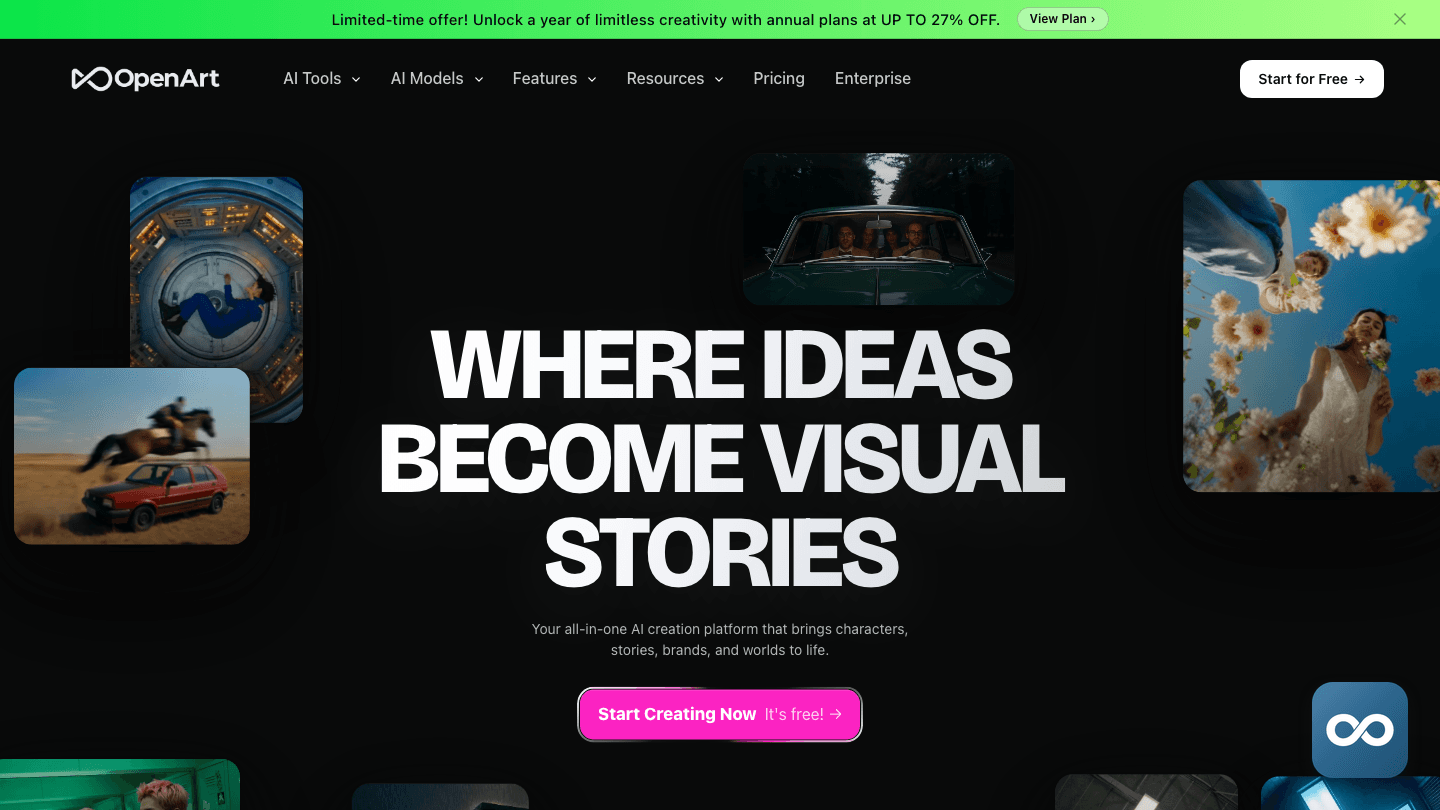
OpenArt, presented as OpenArt AI, is a web application at openart.ai for generating and editing images and short video. You write a prompt or upload a photo, sketch or frame, pick a model, and get an image you can then rework without leaving the canvas: erase a region, extend the frame, replace the background, change the style or upscale the result to 4K. The current homepage names GPT Image 2, Nano Banana Pro and Seedream 5.0 as the generation engines, and the text-to-image page adds Seedream 5.0 Pro. Those are other companies' models. OpenArt's product is the interface, the editing loop and the training tools wrapped around them.
What sets it apart is consolidation. Generation, inpainting, outpainting, restyling, upscaling, character and style training and video generation are one product on one credit balance, so a creator building a character across a story or a campaign doesn't have to hop between several separate tools. Character Training keeps one figure consistent across expressions, poses and variations, and Model Training captures a broader style or visual pattern. The older description of OpenArt as a DALL·E 2, Midjourney and Stable Diffusion front end with 10 million prompts to browse is out of date, and neither that model list nor the prompt count appears on the current pages.
The company is reported as founded in 2022 by Coco Mao, the CEO, and John Qiao, the CTO. It's private, independent and headquartered in San Francisco with an office in Redwood City, and it closed a $30 million Series A led by Canaan Partners in January 2026. Access is through the browser and a Discord community. No native iOS or Android app, desktop app, API or browser extension was confirmed as of August 2026.
How it works
Sign up for the trial
Create an account in the browser. OpenArt gives new accounts 40 trial credits for premium features and advanced models over a seven-day trial, and the homepage says no credit card is required. The trial is the free experience. There's no documented permanent free plan behind it.
Pick a workflow and a model
Choose text-to-image, reference-image generation, editing or video. Where the interface allows it, you also pick the model, with GPT Image 2, Nano Banana Pro and Seedream 5.0 on offer as of August 2026. Each action shows its credit cost before you run it, and the cost differs by model and by whether you're generating, upscaling, making video or training.
Prompt or upload, then generate
Type a prompt, or upload a photo, sketch or frame as a reference and set how closely the structure, composition or style should be followed. Run the generation, then keep working on the same canvas: inpaint a region, outpaint the edges, swap the background, restyle or upscale. Plus allows up to 16 generations to run in parallel.
Keep it private or publish it
Results are private by default until you choose to publish them. OpenArt allows commercial use under its stated conditions, which include attribution to OpenArt and, where applicable, the human artist. From there you download the file into your own workflow, and there's no confirmed API or plugin route.
Features
Text-to-image
Prompt-based generation across the current model lineup, which the feature page lists as Seedream 5.0 Pro, GPT Image 2 and Nano Banana Pro. This is the entry point for most work on the platform, and the model choice is what sets both the look and the credit cost.
Reference-image generation
Upload a photo, sketch or frame and generate from it, with controls that decide how much of the original structure, composition or style survives. This is the route for turning a rough sketch into a finished illustration or restyling a photo while keeping its layout.
Inpainting and outpainting
Select a region to replace or repair, or extend the canvas beyond its edges, without exporting and re-importing. Both live inside the same editing workflow as generation.
Same-canvas editing
After a generation you can erase, restyle, swap the background and upscale on the same canvas. The aim is to skip the export-and-reupload loop that separate tools force, and it's also the trait reviewers most often credit.
4K upscaling
Higher-resolution enhancement up to 4K sits at the end of the editing pipeline. It costs credits like every other action, and the exact rate was not published on the pages we could read.
Character Training and Model Training
Two distinct training paths. Character Training targets consistency for one character across expressions, poses and variations. Model Training captures a broader artistic style, theme or visual pattern. The number of images needed, the credit price and the training time are not documented on the current help pages.
Video generation
Plans carry a monthly video allowance alongside images. Starter is described as up to roughly 50 videos a month, with a note that this excludes Director. What Director is, and how video credits compare with image credits, was not visible on the pricing page.
What people use it for
- Generating realistic photos, characters, anime images, product shots and marketing visuals from a prompt
- Turning a sketch or reference photo into a finished illustration or render
- Keeping one character consistent across a story, a game or a campaign with Character Training
- Repairing, extending, restyling, background-swapping and upscaling images you already have
- Producing short videos and visual assets for content production
- Training a style model from your own reference material
It isn't a tool for adult content. The help center says NSFW material is restricted and flagged, whatever the old category label suggested.
Who it’s for
Pricing
Official pricingIndividual plans
Starter
$14
per month
Per seat; shown promotionally at $13. 4,000 credits a month, up to about 4,000 images and about 50 videos excluding Director
Plus
$34
per month
Per seat; shown promotionally at $27. Up to about 12,000 images and 16 parallel generations; credit total not shown
Wonder
$240
per month
Per seat; shown promotionally at $175. Described as the top tier; credits and entitlements not shown
Everything is metered in credits. The interface shows the credit cost of each action before you run it, whether that's a standard image, a video, an upscale or a model training job, so plan capacity is a rough guide rather than a fixed image count. As of August 31, 2026 the live page lists Starter at $14 a seat per month, shown promotionally as $13 with 10% off, for 4,000 credits, up to about 4,000 images and about 50 videos excluding Director. Plus is listed at $34, shown as $27 with 20% off, for up to about 12,000 images and 16 parallel generations. A Pro tier's price was not visible. Wonder is listed at $240, shown as $175 with 27% off. An Extra Credit option appears at $15 a month, though its quantity was not shown. Those discounts may be promotional rather than annual pricing, so don't read them as permanent savings. Base subscription credits reset monthly and unused base credits are lost, while purchased add-on credits can roll over. Credits are not cash, cannot be transferred or redeemed, and the terms warn the credits an output requires may change. New accounts get 40 trial credits over seven days with no card. The July 30, 2026 terms say purchases are non-refundable with no prorated refunds, except where the law requires, and cancelling stops renewal but leaves access running to the end of the paid period. To cancel, go to Account Settings, then Subscriptions, Change Plan and Choose Free, or use Payment Settings or contact support. Support handles exceptional cases, the help center says, and some of those carry a minimum processing fee. None of the old Free, Essential, Advanced and Infinite tiers at $0, $7, $14.50 and $28 appear any more.
Traffic & reach
Third-party estimates from our last check, a proxy for adoption rather than an official number. June 2026 comes in at about 9.3 million visits, down roughly 15% on May's 10.9 million, and the monthly figure has stayed between 8.7 and 10.9 million since November 2025. Just under 38% of visits arrive direct and about 23% through paid search, so the company is buying a meaningful share of its audience while a bookmarked user base returns on its own. The United States accounts for about a quarter of visits and India for around 12%. Canaan's January 2026 claim of 8 million monthly active users is the company's own figure and has not been independently measured.
Visits, June 2026
9.3M
▼ 15% month over month
Nov '25Jun '26
Top countries
- United States24%
- India12%
- United Kingdom4.2%
- Pakistan3.1%
- Canada2.9%
Traffic sources
- Direct38%
- Paid search23%
- Organic search22%
- Organic social5.3%
- Display ads3.6%
- Referrals3.3%
- Paid social2.2%
- AI assistants2.0%
- Visits, last 3 months
- 29.3M
- Avg. visit
- 5m 44s
- Pages per visit
- 5.6
- Bounce rate
- 37.1%
- Brand searches / mo
- 4.8M
User reviews
Write a reviewNo reviews yet
Used OpenArt on something real? Write down what you made, what it cost and what the trade-off was. The next person can decide in about a minute from that.
Be the first to reviewWhat to know before you commit
What people rate it for. Trustpilot's April 2026 summary says reviewers like the clean interface, the beginner-friendly setup and the freedom to try several styles and models in one place. Many describe support as excellent, responsive and quick to resolve problems. A February 2026 review frames the appeal as consolidation: generation, editing, models and video without juggling separate tools. Then there is a secondary August 2026 review citing a 4.7 Product Hunt rating, which we couldn't check directly.
Billing complaints are a pattern. Trustpilot coverage describes accidental annual-plan charges, subscription confusion, credit-use disputes and dissatisfaction with refunds. The Better Business Bureau record shows 21 complaints in three years, 18 of them closed in the preceding 12 months and seven about billing, including a dispute over monthly base credits being removed at renewal. OpenArt's terms do disclose that base credits don't carry forward. What the complaints say is that the disclosure isn't prominent enough, and the same secondary review characterises Trustpilot as much more complaint-heavy than Product Hunt.
Credit cost matters more than plan capacity. Reviewers say some models don't work correctly, or eat a substantial number of credits before producing a usable result. So the headline image counts on each plan tell you less than the per-action cost shown in the interface. Run a few real jobs during the trial before you commit to a tier.
Refunds are no in writing, sometimes yes in practice. The help center states a strict no-refund policy and the July 2026 terms repeat it. On Trustpilot in March 2026, OpenArt replied to a disputed charge saying it had already refunded the most recent billing period as a goodwill gesture. Treat that as an exception, not a policy you can rely on.
Policy on your data and on content. OpenArt says uploads and user content are used only to deliver the requested service and are not used to train its models, and that generated images are private by default until published. NSFW content is restricted and flagged, with a reporting route in the product and by email. We found no confirmed breach, lawsuit, regulatory action or major outage in our searches, which isn't proof that none occurred.
The growth numbers are the company's own. Canaan's January 2026 post reports 8 million monthly active users, more than $70 million in annual recurring revenue, revenue up sevenfold during 2025 and a cash-flow-positive business built by roughly 20 people. LinkedIn's 2026 record lists 112 employees across 28 countries, a sharp conflict with the 20-person figure. None of this is audited.
Alternatives to OpenArt
 Leonardo.AiBrowser platform and pay-as-you-go API for generating and editing images and video across Leonardo's own and third-party models, with a permanent free tier.
 ClaudeAnthropic's AI assistant for writing, coding, research and analysis, with a permanent free tier and paid plans from $20 a month.
 GammaTurns a prompt, pasted text or an imported file into a deck, document, website or social post, built as editable cards in the browser.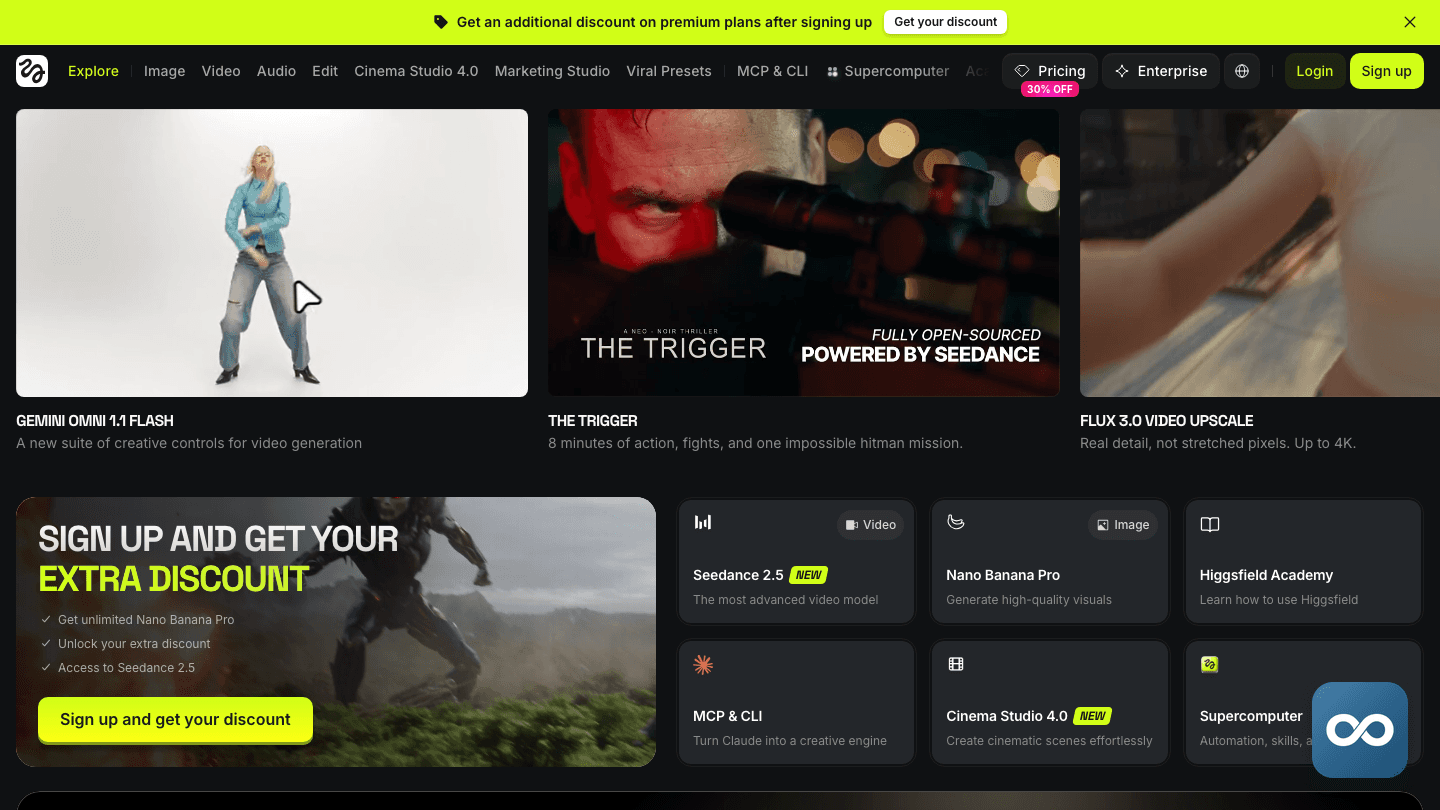
 HiggsfieldAI image and video in one workspace: 100+ named camera moves, 35+ models behind one interface, and character consistency that holds from shot to shot.
 Z.aiZhipu AI's international chat and agent platform on its GLM models, with free web chat, credit-metered coding plans for Claude Code, Cline and OpenCode, and a per-token API.
 Hostinger Managed OpenClawManaged hosting for OpenClaw: a private AI agent in an isolated Docker container, paired to WhatsApp or Telegram and running 24/7 with no server to maintain.
Frequently asked questions
Company & links
- Company
- OpenArt
- Founded
- 2022
- Founders
- Coco Mao, John Qiao
- Leadership
- Coco Mao is CEO and co-founder; John Qiao is co-founder and CTO. A 2026 profile says both previously worked at Google's Area 120 and built a short-form video product that was acquired by Google Search, but that background was not corroborated by primary sources.
- Funding
- Three rounds are reported: a $5 million seed in June 2023 led by DCM Ventures with CapitalOven among the investors, a $5 million venture round in August 2025 whose lead was not confirmed, and a $30 million Series A on January 30, 2026 led by Canaan Partners. That adds to $40 million, though Tracxn records only $30 million and the gap is unreconciled. No valuation was found.
- Scale
- Canaan says OpenArt had about 8 million monthly active users and more than $70 million in annual recurring revenue at the Series A, with revenue up sevenfold in 2025, a cash-flow-positive business and a team of roughly 20. LinkedIn's 2026 record lists 112 employees across 28 countries. All of these are self-reported or third-party figures, not audited ones.
- Contact
- support@openart.ai
Try OpenArt on work you already know
A task you’ve done before is the fastest way to judge whether OpenArt fits your workflow and budget. Check the current plan terms on the official site before you subscribe.