
 Listing checkedFreemiumFree TrialContact sales
Grammarly
AI writing assistant that checks grammar, clarity and tone and drafts text across the browser, Office, desktop and mobile, with a permanent free plan.
- Ratings
- No member reviews yet
- Price
- From $12/mo
- Last updated
Key takeaways
- Grammarly has been checking writing since 2009 and now covers correctness, clarity, engagement, delivery and tone, plus generative AI, in the places people already type: a web Editor, Chrome and Edge extensions, Windows and Mac apps, Microsoft Office, Android, iPhone and iPad. Store ratings held up in 2026: 4.5/5 from 43.1K Chrome Web Store ratings, 4.7/5 from 219K Apple App Store ratings, and 4.2/5 from roughly 258K Google Play reviews.
- The company is becoming something bigger than a grammar checker. It acquired Coda in December 2024, announced intent to acquire Superhuman in July 2025, and said in October 2025 that the company name would become Superhuman, with Grammarly staying on as the writing product. The direction is workplace AI productivity, not standalone proofreading.
- The free plan is permanent, not a trial: core corrections, tone visibility and 100 generative AI prompts a month at $0. Pro is $12 per member per month billed annually, or $30 billed monthly, with 2,000 AI prompts, as of August 2026. Grammarly issues refunds only where the law requires them, and the seven day Pro trial renews automatically unless you cancel.
- Traffic is enormous but contested and drifting down. Third party estimates for mid 2026 range from roughly 46 million to 54 million monthly visits, and the sources disagree about which month each figure belongs to; one series showed 63.6 million as recently as March 2026. About 46% of visits arrive direct, which is what a bookmarked daily tool looks like. The company's own claim of more than 40 million daily users is self reported.
- The biggest caveat is billing and support, not the correction engine. BBB complaints from August 2025 through January 2026 allege unexpected annual charges after trials, continued charges after cancellation and refused refunds, and a January 2025 Trustpilot review described six support cases going unanswered after a $139.99 annual purchase. These are user allegations rather than adjudicated findings, but the pattern recurs across platforms.

What is Grammarly?
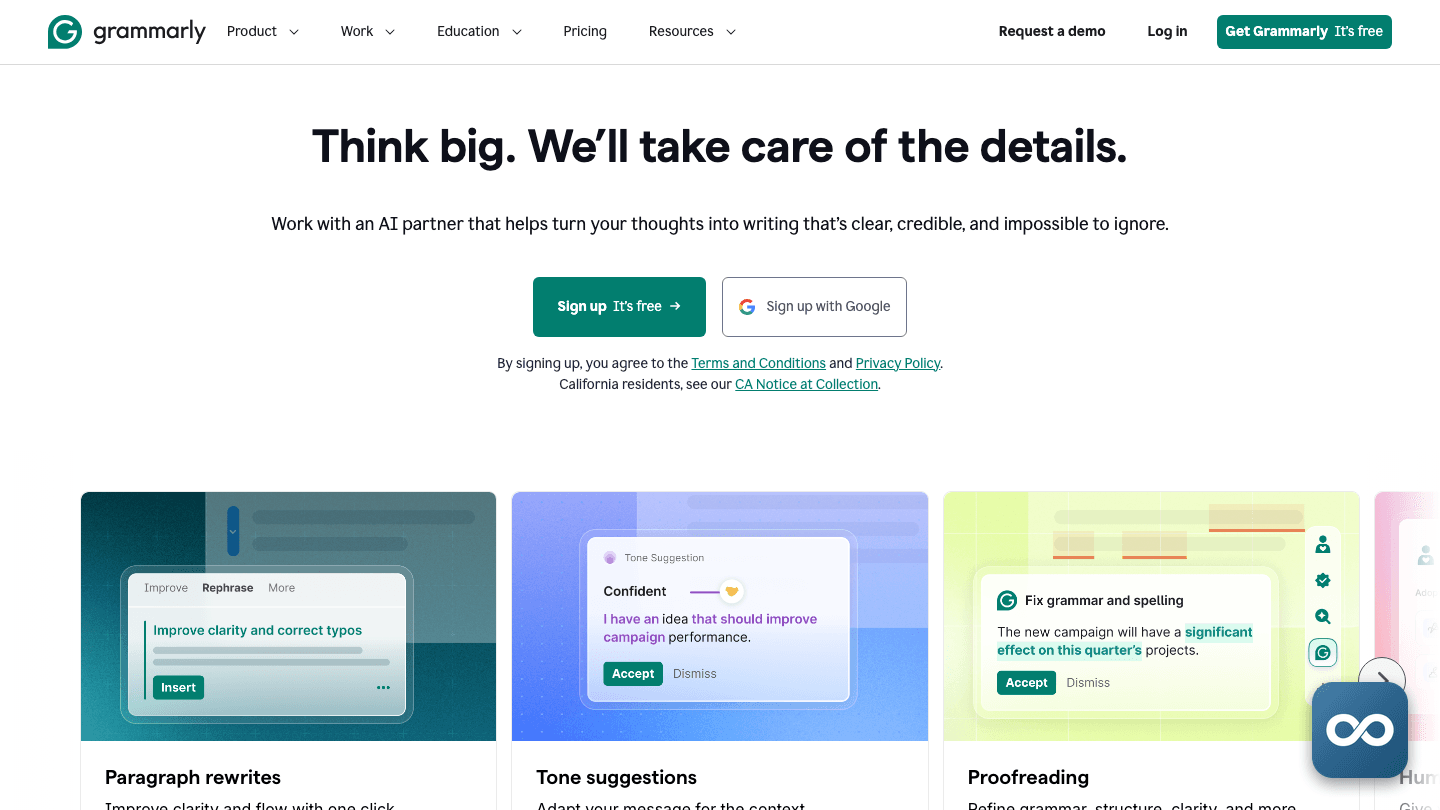
Grammarly is a writing assistant operated by Grammarly, Inc., the San Francisco company that announced in October 2025 it would take the name Superhuman while keeping Grammarly as the product. It is proprietary SaaS, not open source, delivered through a web Editor at app.grammarly.com, Chrome and Edge extensions, Windows and Mac apps, a mobile keyboard for Android, iPhone and iPad, and Microsoft Office integration. The product reads what you type and suggests fixes across six dimensions: correctness, clarity, engagement, delivery, tone and style, and since the generative AI additions it also drafts, rewrites, brainstorms and replies on request.
What sets it apart is distribution, not any single feature. The suggestions follow you into email, Slack, documents, social tools and Office instead of living in one app, and Grammarly has been refining the correction engine since 2009, longer than almost anything else in the category. That reach has a cost. Users report extension freezes, high resource use, false positives and coverage that stays mainly English centred.
Around the product sits a company in transition. Grammarly bought Coda in December 2024, moved to acquire the email client Superhuman in July 2025, and took $1 billion in non dilutive financing from General Catalyst in May 2025 to fund an AI productivity platform, per Reuters. If you just want cleaner emails, none of that changes your day to day. It does explain why the enterprise tier now leads with governance, data loss prevention and unlimited AI prompts.
How it works
Open the Editor or add Grammarly where you type
Sign in at app.grammarly.com and write or paste a document into the browser Editor; the Free plan works without paying. Most people also install a surface: the Chrome or Edge extension, the Windows or Mac app, the Office integration, or the Android or iOS app, so suggestions appear wherever they already write.
Review the suggestion cards
Grammarly underlines issues and groups its feedback into correctness, clarity, engagement and delivery. You open a card, read the rationale, and accept, dismiss or edit the recommendation. Suggestions are context dependent, so the intended workflow is review, not blind acceptance.
Draft and rewrite with AI prompts
In supported surfaces you enter a prompt or invoke the compose, rewrite or reply tools. Each request draws on the plan's monthly allowance: 100 prompts on Free, 2,000 on Pro, unlimited on the organization plan, as of August 2026.
Keep the text where you work
Finished text stays in the Editor or goes back into the host app: email, documents, Slack, Office or another supported site. An API, CLI or MCP route was not confirmed in Grammarly's published material as of August 2026, so this is an in-app product, not one you script.
Features
Correctness
Grammar, spelling, punctuation and usage suggestions with explanations attached, so you can see why a change is proposed rather than just what to click. This is the original product and still the core of the Free plan.
Clarity
Flags wordiness and complicated constructions and proposes more direct wording. It targets the sentence you wrote instead of generating a new one.
Engagement
Helps vary repetitive language and strengthen word choice, aimed at prose that is technically correct but flat.
Delivery and tone
Tone detection shows how a message is likely to land, and suggestions adjust formality, confidence, warmth or professionalism before you hit send.
Generative AI
Compose, brainstorm, rewrite and reply from a prompt, metered by the monthly allowance on each plan. Grammarly's April 2025 AI governance statement names Microsoft Azure OpenAI and OpenAI as infrastructure partners, though it doesn't say which model powers which feature.
Full-sentence rewrites and plagiarism detection
Paid plans rewrite whole sentences instead of only correcting errors, and can compare text against sources for potential plagiarism. Grammarly's published material doesn't specify the plagiarism database's scope, so treat the coverage as unverified.
Brand tones and style guides
Pro, team and enterprise materials describe on-brand writing controls: style guides, snippets, knowledge sharing and usage analytics, so a team's output sounds like one company rather than many authors.
What people use it for
- Revising professional emails and customer replies before they go out.
- Making project proposals clearer and more persuasive.
- Tightening Slack messages and adding concrete deadlines.
- Keeping marketing and sales copy on brand tone.
- Checking student essays for grammar and potential plagiarism.
- Drafting, rewriting and brainstorming from a prompt.
- Improving tone and readability in workplace documents.
Grammarly isn't a substitute for expert fact checking, substantive editing or guaranteed originality and legal review. It proposes language changes, its suggestions are context dependent, and its AI output can be imperfect.
Who it’s for
Pricing
Official pricingIndividual plans
Free
$0
per month
Core grammar, spelling and tone checks plus 100 generative AI prompts a month, permanent
Pro
Popular$12
per member per month, billed annually
Full-sentence rewrites, tone adjustment, on-brand features and 2,000 AI prompts a month; $30 billed monthly
Business plans
Enterprise
Custom
contact sales
Unlimited members and AI prompts, confidential mode, granular roles, data loss prevention, dedicated support
As of August 2026 the plan page shows Free at $0 with 100 AI prompts a month as a permanent tier, and Pro at $12 per member per month billed annually ($144 a year), $30 billed monthly, or $60 per three months, with 2,000 AI prompts and support for up to 149 prorated seats. Two things complicate the picture. First, the Apple App Store and Google Play still sell a subscription named Premium, with core paid features, plagiarism detection and 1,000 monthly prompts but no team admin functionality: a channel naming split, not a fourth web tier. Second, the written terms are stricter than the checkout suggests: the seven day Pro trial takes $0 today, emails a reminder two days before it ends, then auto renews on the stored payment method; cancellation (Account, then Subscription, then Cancel Subscription) stops renewal but keeps paid access through the term; and refunds are issued only where required by law, with billing errors reviewable and App Store refunds handled by Apple. Prompt rollover, expiry, top up packs and enterprise per seat pricing aren't published, and the terms permit fee changes with advance notice before the next billing cycle.
User reviews
Write a reviewNo reviews yet
Used Grammarly on something real? Write down what you made, what it cost and what the trade-off was. The next person can decide in about a minute from that.
Be the first to reviewWhat to know before you commit
What people rate it for. Store reviews credit the speed and convenience of real time grammar, punctuation, clarity and tone feedback across apps: 4.5/5 on Chrome Web Store (43.1K ratings), 4.7/5 on the App Store (219K) and 4.2/5 on Google Play (about 258K) in 2026. Third party snapshots reported by CheckThat.ai put G2 at 4.7/5 from 13,688 reviews and Capterra at 4.7/5 from 7,213. Professional users single out ease of use and the integrations.
The billing complaints are a pattern. BBB entries from August 2025 through January 2026 allege unexpected annual charges after trials, continued charges after cancellation, refund refusals and no human support; a January 2025 Trustpilot review described six support cases closed without meaningful response after a $139.99 annual purchase. These are individual allegations, not adjudicated findings, but they recur across BBB, Trustpilot and app store reviews. Read the renewal terms at checkout.
The product has rough edges outside the happy path. Recurring complaints cover false positives, intrusive upselling, extension freezes, high resource use and mainly English centred language coverage. Mobile draws specific frustration: one 2026 Google Play reviewer said an update cut free rewrites to one a day and lowered suggestion quality, and another said the keyboard appears at unwanted times or fails when needed. An August 2026 editorial review scored it 2.9/5 on reliability, pricing and support grounds, though that's one publication's rating, not a platform aggregate.
Data use and security posture. Grammarly's April 2025 AI governance statement says partners are prohibited from training models on customer content and that it does not sell user content. Its privacy policy still describes processing for service delivery, personalization, troubleshooting and improvement, with troubleshooting retention up to one year and Editor documents kept until you delete them. A SOC 3 report covering April 2024 through March 2025 and an ISO/IEC 27701 certificate reissued June 2025 back the security claims. No confirmed breach, regulator enforcement or major outage surfaced in our checks.
The company is becoming Superhuman. The company bought Coda in December 2024, announced the Superhuman deal in July 2025, and said in October 2025 that the corporate name would become Superhuman with Grammarly retained as the writing product. Expect listing copy, invoices and product branding to shift while that transition completes.
The growth numbers are the company's own. More than 40 million daily users, 50,000 organizations and reach into 96% of the Fortune 500 are company profile claims. Reuters reported revenue above $700 million and profitability in May 2025, based on company information rather than audited disclosure, and third party headcount estimates conflict materially, from 701 to about 2,500.
Alternatives to Grammarly
 GeminiGoogle's AI assistant for writing, research, coding and everyday questions, free with a Google Account and upgradable through Google AI Plus, Pro and Ultra plans.
 JuicyChat AIAdult character chat with community-made and custom personas, plus coin-metered images and voice on web, iOS and Android.
 PixVerseAI video generator that turns prompts, photos and clips into short video, with a free daily credit allowance and a library of social effects.
 GensparkAll-in-one AI workspace with a Super Agent, Sparkpages and slides, sheets, docs, code and media tools running GPT, Claude, Gemini and Grok behind one login.
 Base44Wix-owned vibe coding platform that turns a plain-language brief into a hosted web app with data, logins, permissions and backend logic.
 Dewy ChatAn 18+ mobile roleplay app for chatting with AI characters, creating your own personas and worlds, and talking through voice notes and phone calls.
Frequently asked questions
Company & links
- Company
- Grammarly Inc.
- Founded
- 2009
- Founders
- Max Lytvyn, Alex Shevchenko, Dmytro Lider
- Leadership
- Shishir Mehrotra is CEO, appointed after Grammarly acquired his company Coda in December 2024. Founders Max Lytvyn, Alex Shevchenko and Dmytro Lider, Ukrainian software developers who started the company in Kyiv in 2009, remain associated with it; CNBC reported in January 2025 that the company nearly ran out of money in its early years. A complete current executive roster is not confirmed.
- Funding
- The sources disagree. Reuters puts venture capital raised above $550 million with a $13 billion valuation from a 2021 round, plus a $1 billion non dilutive financing from General Catalyst in May 2025; Tech.eu reports total financing above $1.4 billion including that transaction. The Coda (December 2024) and Superhuman (July 2025) acquisition terms were not disclosed.
- Scale
- Reuters reported annual revenue above $700 million and profitability as of May 2025, based on company information rather than audited disclosure. The company's profile claims more than 40 million daily users, 50,000 organizations and reach into 96% of the Fortune 500, all self reported. Headcount estimates conflict, from 701 to about 2,500 employees, and no single figure is confirmed.
Try Grammarly on work you already know
A task you’ve done before is the fastest way to judge whether Grammarly fits your workflow and budget. Check the current plan terms on the official site before you subscribe.